- What is in an order?
- How orders get to the exchange?
What is in an order?
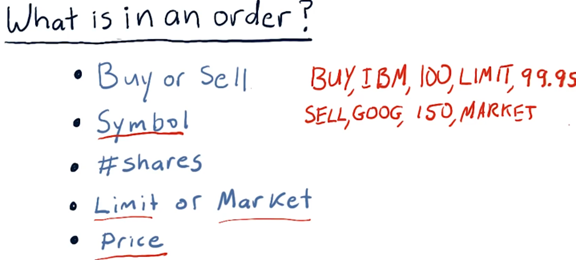
Example:
1 | BUY,IBM,100,LIMIT,99.95 |
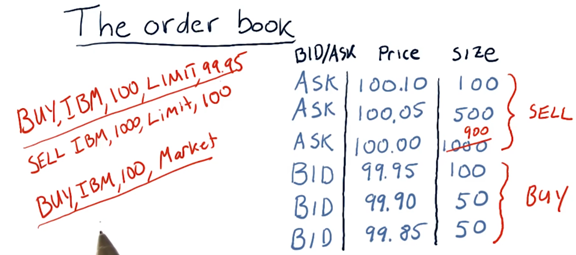
The order book
Each stock exchange maintains a public order book for each stock that they buy or sell. Investors view the order book to determine how other investors are interested in transacting this stock.
Up or down quiz
Consider the following order book. Do you think the price of this equity is likely to go up or down in the near future?
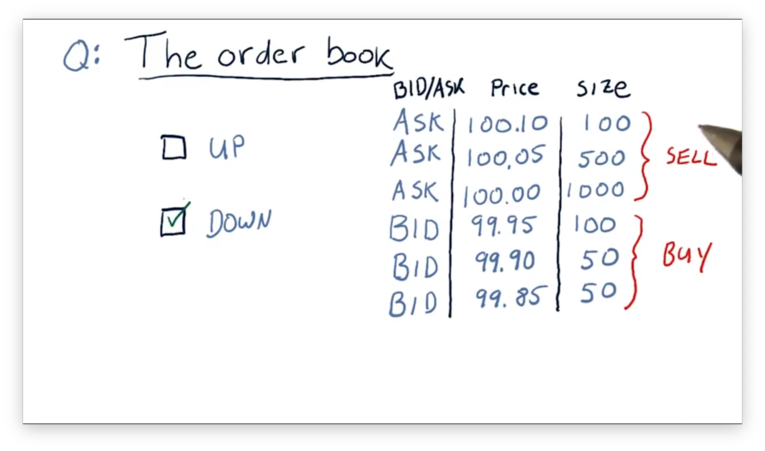
The price is likely to drop in the near future because there is more selling pressure than buying pressure.
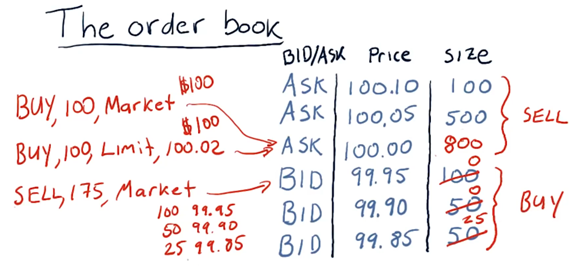
Consider what would happen if we put in a market order to sell 200 shares. We would get 100 shares at \$99.95, 50 shares at \$99.90, and 50 shares at \$99.85. Our single order would cause the price of the equity to drop by \$0.10.
On the other hand, suppose we issue a market order to buy 200 shares. We would receive 200 of the 1000 shares available for sale at \$100. The next market buy order would start with the remaining 800 shares for sale at \$100. In other words, our buy order wouldn’t affect the sale price at all.
Here is a screenshot of a real-life order book.
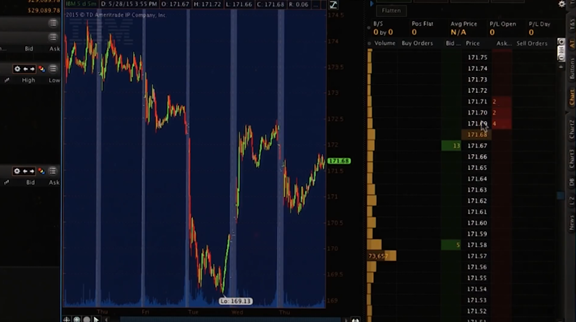
On the right-hand side, we can see different sell and buy orders and the corresponding execution prices. On the left-hand side, we see a chart depicting the price movement over time as the exchange fulfills these orders.
How orders get to the exchange
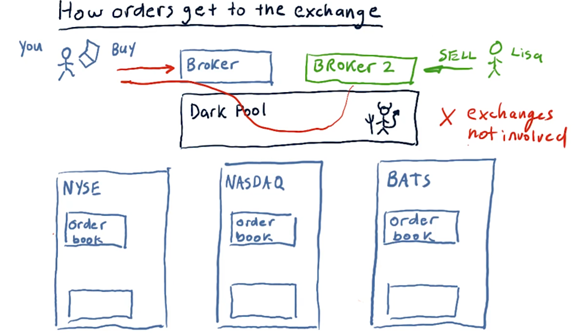
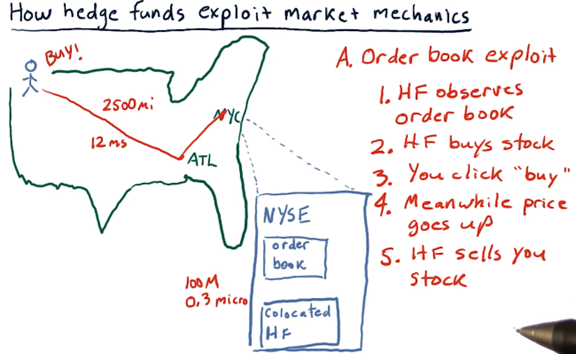
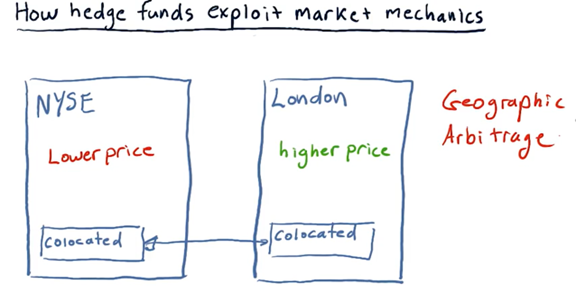
How hedge funds exploit market mechanics